
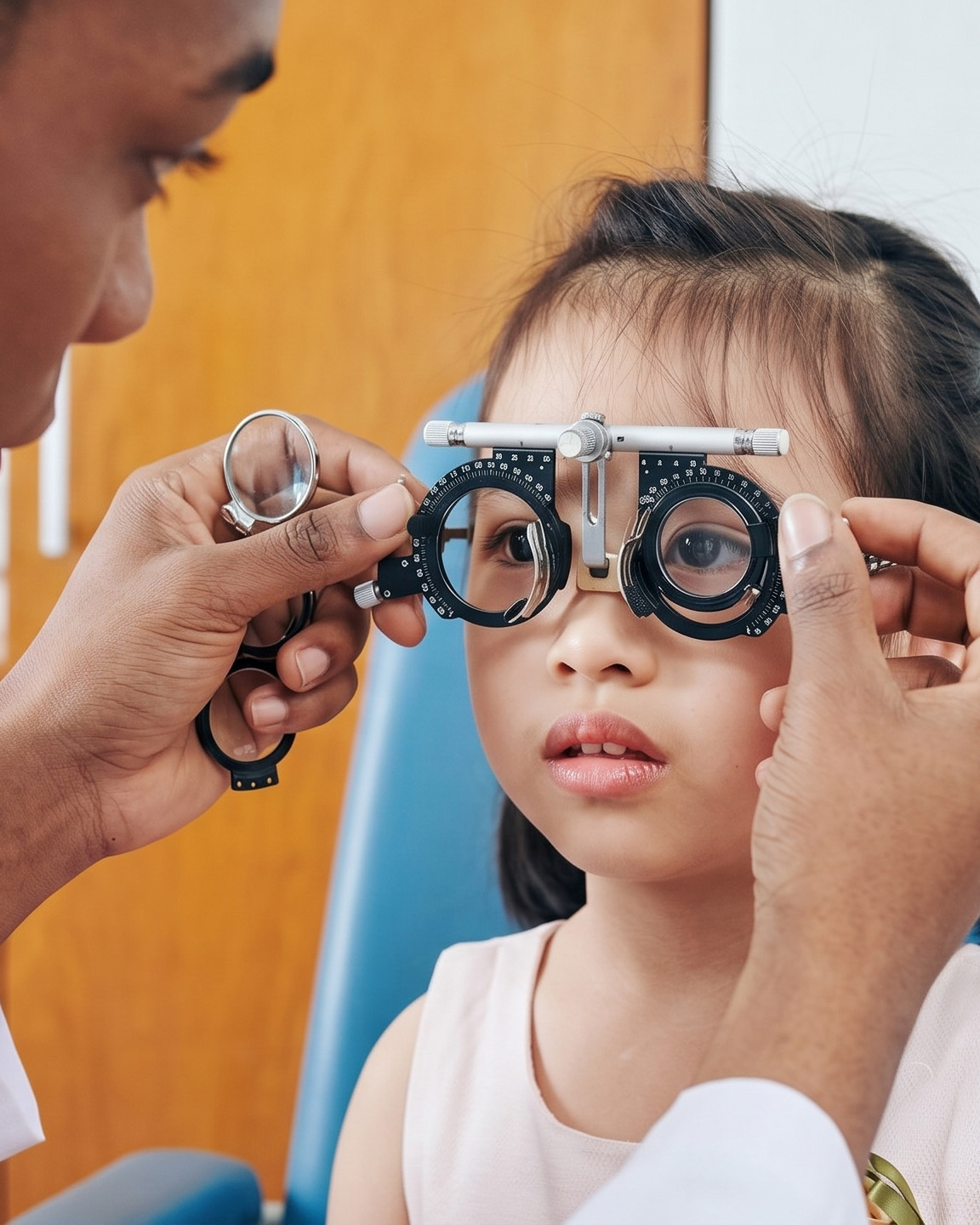
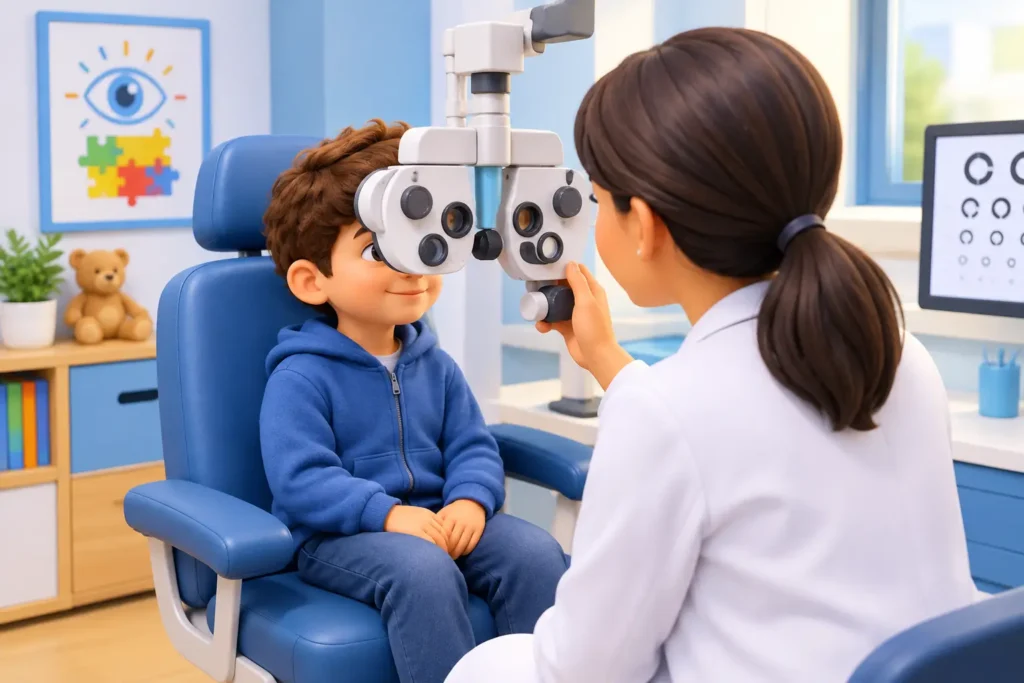
Children with Special Educational Needs (SEN) may experience challenges with communication, sensory processing, learning or development. These can sometimes make visiting an optician more difficult. However, regular eye care remains an important part of supporting a child’s overall wellbeing and learning.
Why Are Eye Tests Important for Children with SEN?
Good vision plays an important role in reading, writing, classroom participation and everyday activities. Some children may find it difficult to explain that they cannot see clearly, particularly if they communicate differently or have additional developmental needs.
Signs that a child may be experiencing vision difficulties include:
- Sitting very close to screens or books.
- Squinting or frequently rubbing their eyes.
- Finding reading or visually focused activities difficult.
- Becoming uncomfortable in bright lighting.
- Experiencing headaches after activities requiring close vision.
These signs do not necessarily mean a child has a vision problem, but they may indicate that an eye examination would be helpful.
How Can an Optician Support a Child with SEN?
Every child is different, so an eye examination should be adapted to their individual needs wherever possible.
An optician may be able to offer additional support, such as:
- Explaining each step of the appointment in simple language.
- Allowing extra time for the child to become comfortable.
- Using visual explanations or demonstrations.
- Reducing unnecessary noise and sensory distractions.
- Encouraging parents or carers to share information about the child’s communication and sensory preferences.
Parents can also ask about quieter appointment times or other reasonable adjustments before visiting.
Preparing Your Child for an Eye Test
A little preparation can help make the appointment feel more familiar and predictable.
Consider talking through what will happen, using pictures or a social story, and explaining the equipment the optician might use. Bringing a favourite comfort item may also help some children feel more settled.
It is useful to tell the optician about any previous experiences, specific triggers or adjustments that have helped your child in other healthcare settings.
What If My Child Cannot Complete a Standard Eye Test?
Some children may find conventional vision tests difficult because of communication, attention or sensory needs. This does not mean their vision cannot be assessed.
The optometrist can consider alternative approaches depending on the child’s age, abilities and individual circumstances. If a complete assessment is not possible during one visit, the practice can discuss appropriate next steps or referral options.
Supporting Your Child’s Eye Health
If you have concerns about your child’s vision, you do not need to wait until they can describe a problem clearly before seeking advice.
An eye examination can help identify vision difficulties and determine whether further assessment or support is needed. If your child has SEN, let the practice know when booking so that suitable arrangements can be discussed in advance.
Need advice about your child’s eye care? Contact your local optician to discuss your child’s needs and find out what support may be available for their appointment.
This article provides general information and is not a substitute for individual professional advice.